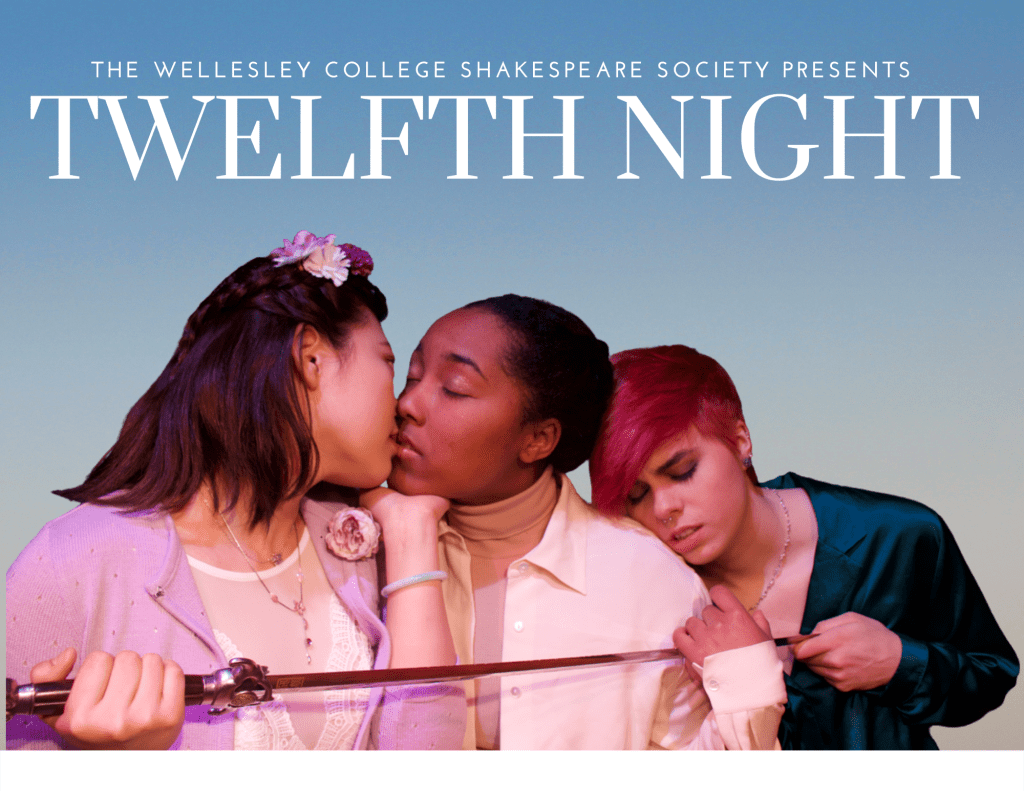
Directed by Chloe Ratte
Technical Director – Carson Morrissey
Stage Managers – Grace Holmes & Emma Ross
Director’s Note
Welcome, friends, family, and newcomers to this space, to Twelfth Night.
In trying to figure out what I wanted to say about this show, I was pulled in far too many directions: talk about the exploration of gender, obviously, okay, and that ties into this crackling spark of being in your twenties and all the heightened drama and softer finding yourself that comes with it. And then, of course, in that exploration of character, I need to discuss the central place music takes in relating those emotions, and then if we’re talking about emotions, we have to talk about how grief lingers in every quiet moment and ocean metaphor of this show. Then, if we’re talking about ocean metaphors, we have to talk about Sebastian, which means we need to talk about the queer reading of the show, and how irresolute the ending is, and how I directed that, and when in this am I supposed to mention that it takes place in a frat house?
Twelfth Night is a messy play.
It is also my favorite Shakespeare show, for every complicated reason mentioned above. It’s a show about being young and on the knife-edge between chasing some no-consequences high and stomaching decisions and emotions that still feel too big for the barely-adult you are. It’s about value found in momentary joy, in hope for connection and for a better future, even if it doesn’t quite turn out that way. It’s about love, however brief.
There isn’t an easy way to convey these things. The written word isn’t enough, and even spoken theater oft falls short. So where there were gaps, we turned to music and to movement. From the main character’s name — Viola — to those first, famous lines of the show — “If music be the food of love” — Twelfth Night declared itself musical, and my first decision of the play was twofold: music will be central, and so will movement. I knew I wanted scenes-between-scenes, scenes without words, where I could try to convey ideas about gender, about unspoken love, about grief, backed by moments of music. I wanted to add something of my own to a play that has been done, and done, and done again, and come away with a show that is larger, more cohesive, than its parts — all fit together and played on a host of guitars.
I hope, in that product, you can find yourself.
Whether that be in the examination of Viola and their gender, or the melancholy of a what-if love; in the pain of betrayal or the rush of success; in the lingering ache of grief or the sharp joy of reunion, I hope something in this show resonates with you. I have spent these past weeks bearing witness to an incredibly talented group of people putting their hearts, minds, ideas, and passion into creating this show, and for that it is their show, even more than it is mine, and I owe them everything for it. I hope it can become, in some way, your show too.
Ending this note invites a similar issue, to that I had in ending the show. How do you end something that refuses closure?
With an understanding, I suppose, that the ending is never really an end.
The song of Twelfth Night doesn’t finish. There is no final chord, no harmonic resonance to mark a resolution. Loose ends, fray notes, unfound revenge, undiscussed revelations, love that couldn’t quite find its place — they all linger on, escaping the bounds of the play, echoing out, and maybe, somewhere beyond the stage, finding the rest of their story.
For us, for now, we can only say what was writ. And so, as Shakespeare wrote—
In Faith and Service,
Chloe Ratte
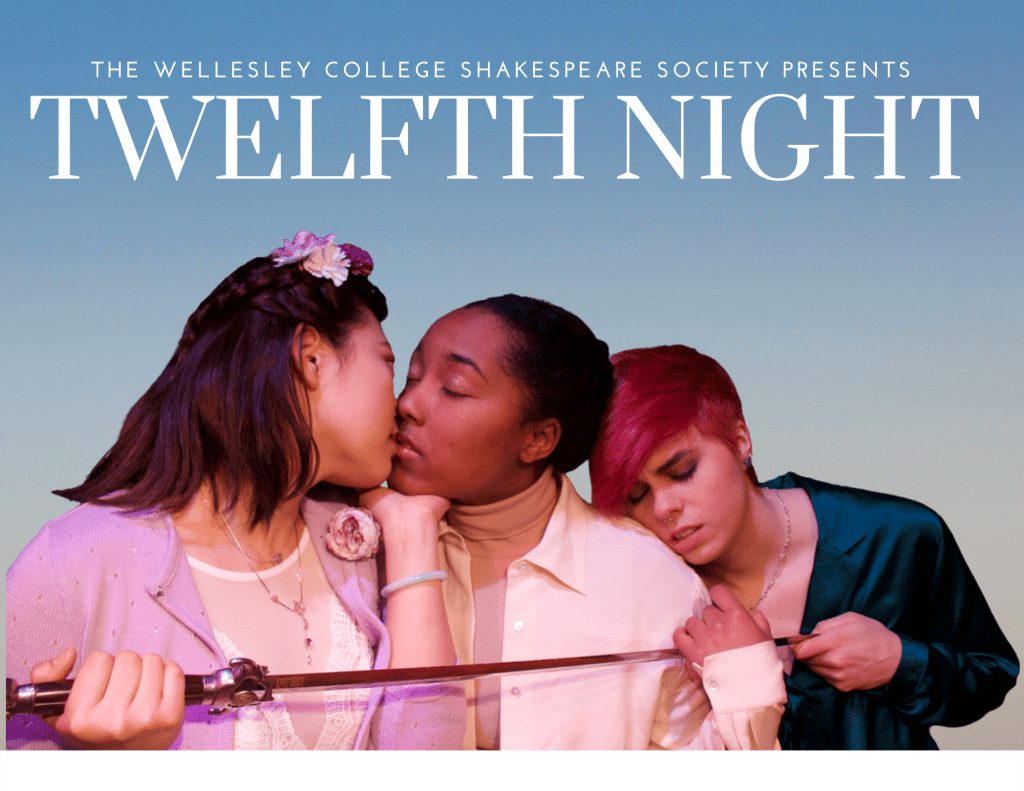
 Wellesley College Shakespeare Society