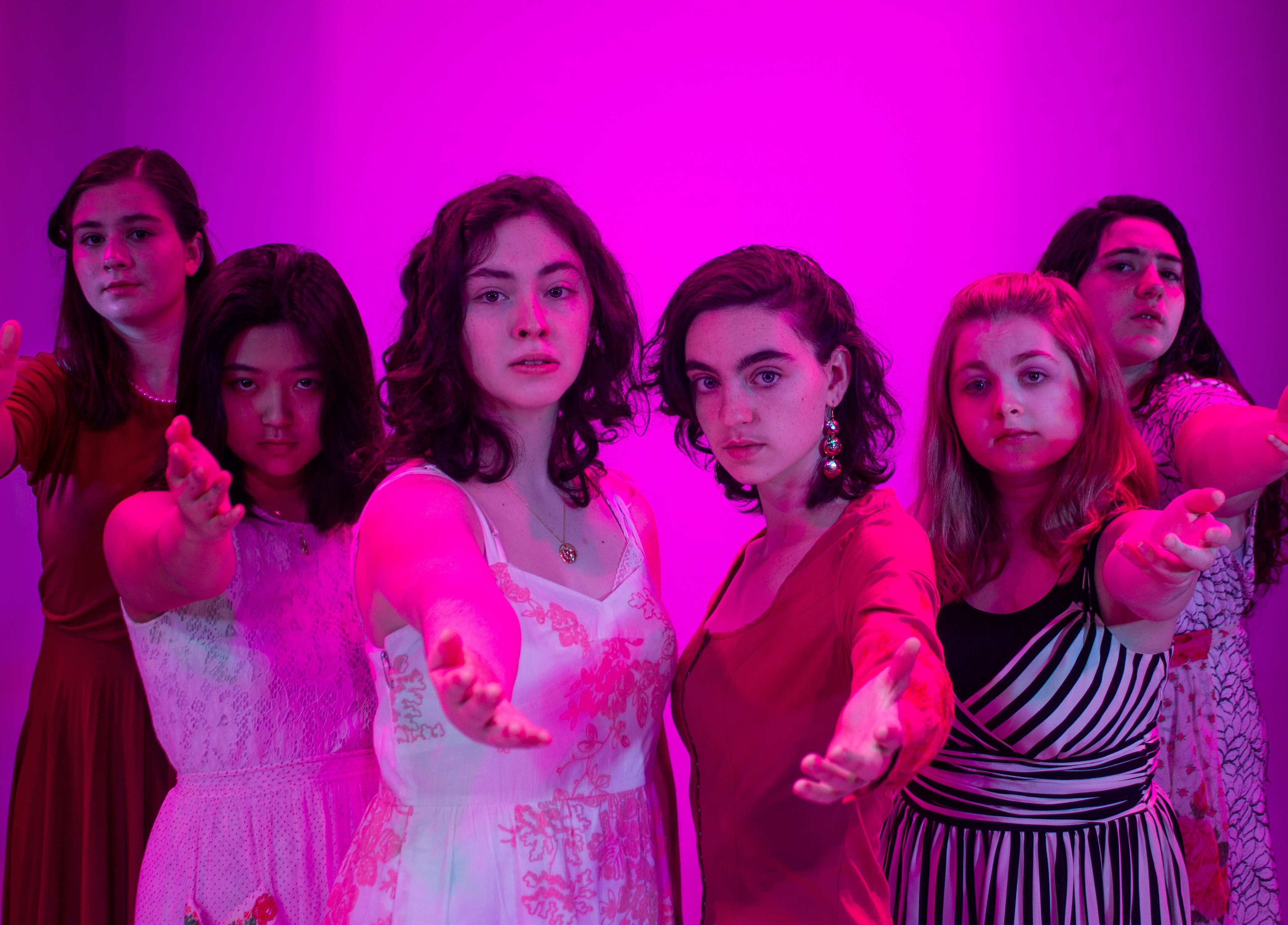
Directed by Paige Calvert
Technical Director – Vic Gao
Stage Managers – Kacenka Farr Williams & Jessica Wu
Director’s Note
This is a play about gender and power. This is a play about love and family. This is a play about Nothing. This is a play that is also the physical representation of my senior English thesis, so if you haven’t yet, I would very much appreciate it if you took a few moments to fill out my pre-show survey (which you can find either as an insert in your program or through the QR code on the next page). Now that I’ve gotten that out of the way, let’s dive in, shall we?
William Shakespeare’s Much Ado About Nothing is one of his most famous comedies known for the witty, amorous banter between Beatrice and Benedick and the malapropisms of Dogberry and the Watch. In Shakespeare’s time, “nothing” sounded like how we today pronounce “noting”. Taken literally, the title implies that a great fuss “much ado” is made of something which is insignificant “nothing”, such as the unfounded claims of Hero’s infidelity and the claims that Benedick and Beatrice are in indeed in love with each other. Nothing was also a euphemism for female reproductive organs, and so not only could women only hold authority over their virginity, even that authority was shaky at best. For my thesis, I chose to explore how women, their power, and “nothing-ness” is related in Shakespeare’s works.
When elected as Director, I chose Much Ado not simply because it has “nothing” in its title, but because the men, their truth, and their perception of the world dominate this play. For me, Much Ado has always had extremely troubling undertones, which are only heightened in the era of the #MeToo Movement. At the heart of this play are women who are oppressed, and through this production I hope that I have highlighted their situations, as well as subverted their textual circumstances through expressive movement pieces. We can only appreciate the light and funny moments like Benedick being fooled, when put in contrast with the dark and unsettling moments like Hero being disowned at the altar. Have any of the male characters learned anything about their position? The power they hold? The people they hurt? I’ll leave that up to you, the audience, to decide.
As a final note, I want to dedicate this show to my mother, for never letting me think, not for one second, that I am nothing.
Thank you so much for coming to spend some time with us in Messina, and I hope that you enjoy the show! (and also fill out my post-show survey!)


 Wellesley College Shakespeare Society